



BNB Talk
Creatine Side Effects: What's Real and What's a Myth
The creatine side effects that are real, the myths (kidneys, hair loss, cramps), and how to take creatine so you avoid problems.

Walk into any gym and you'll hear a dozen opinions on creatine. One person swears it's the secret behind their new PB. Another whispers about kidney damage and hair loss. Creatine is one of the most researched supplements on the planet, yet it's surrounded by more myths than a Greek god.
At Booty N Buff we don't deal in bro-science. So here's the straight answer: which creatine side effects are real, which are myths, and how to take creatine so you don't run into any of them. We lean heavily on the International Society of Sports Nutrition (ISSN) position stand on creatine, a review of hundreds of studies that represents the scientific consensus.
Creatine side effects in 30 seconds
- Is creatine safe? For healthy adults, yes. It's one of the most studied supplements there is, with studies running up to five years.
- Real side effects: 1 to 2kg of water weight in the first week, and an upset stomach or bloating if you take big doses in one go.
- Myths: kidney damage in healthy people, hair loss, dehydration and cramps, and "it's a steroid".
- How to avoid problems: 3 to 5g a day, with food and plenty of water. Skip the loading phase if your stomach is sensitive.
What is creatine?
Creatine is not a drug, a hormone or a steroid. It's a natural compound your liver, kidneys and pancreas make every day from three amino acids, and you also get it from red meat and fish. The creatine in a supplement is the exact same molecule, just in a bigger, more convenient dose.
Here's how it works. Your muscles run on a fuel called ATP, but they only store enough for a few seconds of all-out effort, like one heavy lift or a short sprint. Your muscles store creatine as phosphocreatine, which recharges spent ATP almost instantly. Taking creatine is like fitting your muscles with a bigger battery pack: you can squeeze out an extra rep or two, and over weeks and months that extra work adds up to more strength and muscle.
The ISSN calls creatine monohydrate "the most effective ergogenic nutritional supplement currently available" for high-intensity exercise and lean muscle.
The real creatine side effects (and how to avoid them)
Creatine is very well tolerated, but a few things are real. None of them are dangerous for healthy people, and they're all easy to manage.
1. Weight gain from water
Most people put on 1 to 2kg in the first week, especially with a loading phase. That's water being pulled into your muscle cells, not fat. It's a sign the creatine is working. If you're weighing in for a sport, plan for it.
2. Upset stomach
Big single doses (10g or more at once) can cause stomach cramps, nausea or diarrhoea in some people. The fix is simple: split larger doses into 5g servings, take creatine with food, and mix it with plenty of water.
3. Bloating
Some people feel puffy during a loading phase of 20g a day. If that's you, skip loading and take 3 to 5g a day from the start. You'll get to the same place in 3 to 4 weeks.
4. A higher creatinine reading on blood tests
Your body breaks creatine down into creatinine, which doctors use to check kidney function. Taking creatine can raise your creatinine reading even when your kidneys are perfectly healthy. Just tell your doctor you take creatine before a blood test so they read the result correctly.
Most creatine "side effects" come from taking too much at once. Take 3 to 5g a day, with food and water, and most people never notice a thing.
Creatine myths, busted
Myth: "Creatine will wreck your kidneys"
This is the big one, and it's been studied to death. The ISSN found no evidence that short- or long-term use of creatine monohydrate harms healthy people, including studies using high doses (up to 30g a day) for as long as five years. The caveat: if you have kidney disease or reduced kidney function, check with your doctor before taking creatine, as you would with any supplement.
Myth: "Creatine makes you go bald"
This one traces back to a single small study from 2009 on college rugby players. It found a rise in a hormone called DHT, which is linked to male pattern baldness. That study never measured hair loss, and later studies haven't repeated the DHT result. A 12-week controlled trial that looked at hair directly found no difference in DHT or any hair measure between the creatine group and the placebo group. There's no good evidence that creatine causes hair loss.
Myth: "Creatine causes dehydration and cramps"
Creatine does pull water into your muscle cells, but it doesn't drain water from the rest of your body. The ISSN found no solid evidence that creatine causes dehydration or cramps, and some research suggests it may even help athletes cope with heat. Drink plenty of water anyway, because you train.
Myth: "Creatine is basically a steroid"
Not even close. Creatine is a natural compound made from amino acids that works inside your muscles' energy system. Steroids are synthetic drugs that act on your hormones. Creatine is a legal supplement allowed by every major sports body. Steroids are controlled substances banned by every anti-doping agency.
Myth: "It's just water weight"
The first-week gain is mostly water. But the reason creatine works long term is that it lets you train harder and do more total work, week after week. That extra work builds real muscle, which stays as long as you keep training.
Who should check with a doctor first?
- Anyone with kidney disease or reduced kidney function.
- Anyone on medication that affects the kidneys.
- Women who are pregnant or breastfeeding.
- Anyone under 18.
How to take creatine without side effects
| Option | How much | How long | Good for |
|---|---|---|---|
| Loading phase | About 20g a day, split into four 5g serves | 5 to 7 days, then 3 to 5g a day | Fastest results. Higher chance of bloating or an upset stomach |
| Daily dose only | 3 to 5g a day | Ongoing | Simplest and gentlest. Full results in 3 to 4 weeks |
- Take it every day, including rest days. Consistency matters far more than timing. (Read more in our creatine timing guide.)
- Take it with food. A meal or a protein shake is easier on the stomach and may help your muscles absorb it.
- Drink plenty of water through the day.
- No need to cycle off. You can take creatine year round.
Which creatine is best?
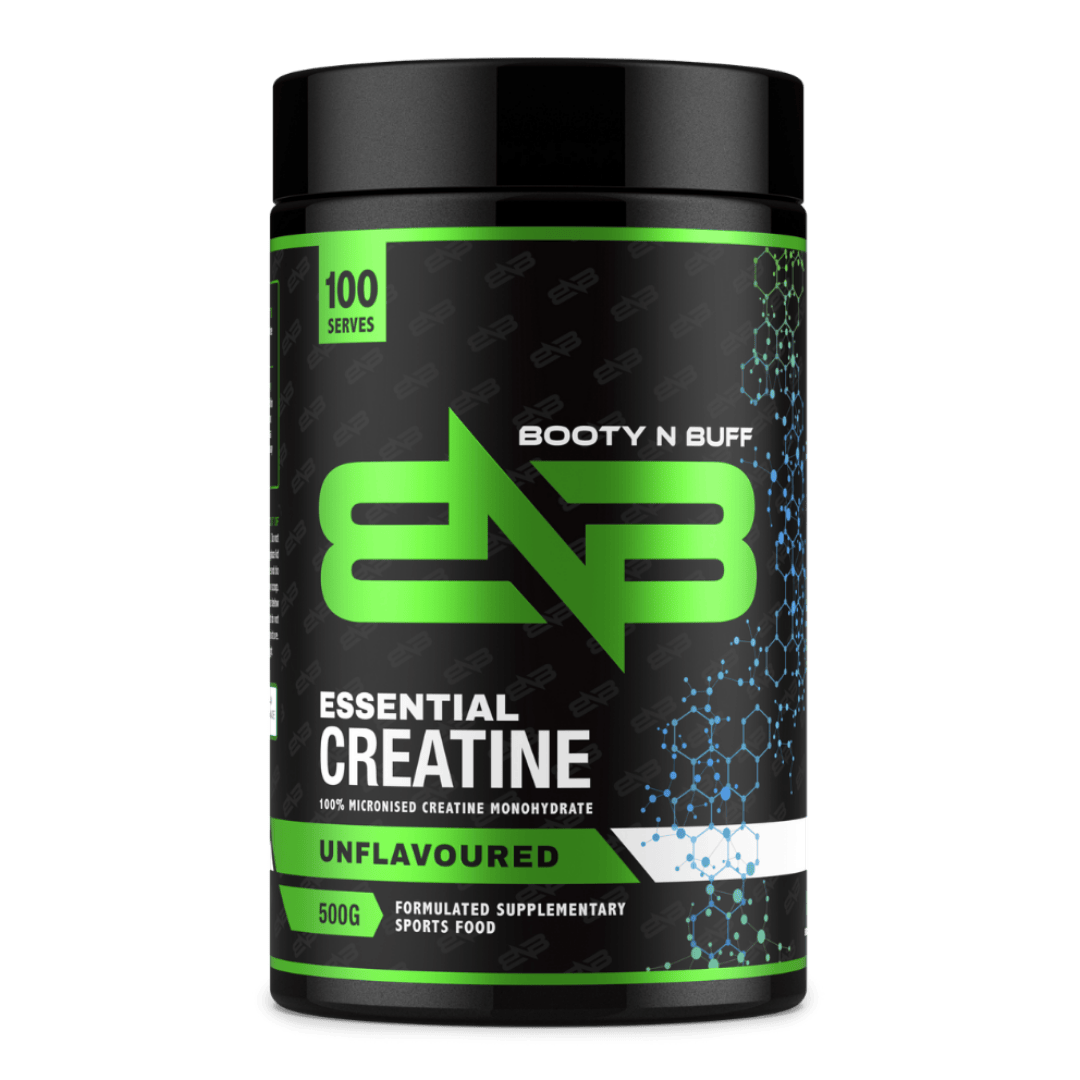
Creatine monohydrate. It's the form used in almost all the research, it works, and it's the cheapest. Our own Essential Creatine is pure creatine monohydrate, unflavoured, so it mixes into water, juice or your shake with no taste. Other monohydrates we rate include Optimum Nutrition Micronized Creatine and Zombie Labs Creatine Monohydrate.
Other forms, like creatine HCl, often promise fewer side effects or better absorption. There's no strong evidence they work better than monohydrate. That said, if powder upsets your stomach or you hate mixing it, creatine HCl capsules or creatine gummies are an easy alternative. Browse our full creatine range.
Benefits beyond the gym
Creatine isn't just for bodybuilders. Vegetarians and vegans start with lower creatine stores because they don't eat meat or fish, so they often notice a bigger difference from taking it. Researchers are also looking at creatine for older adults, where pairing it with resistance training helps hold on to muscle and strength, and at its role in brain energy. The muscle research is strong; the brain research is still early.
Creatine side effects FAQ
Is creatine safe to take every day?
Yes. For healthy adults, 3 to 5g a day is safe for long-term use. Studies have followed people taking creatine for up to five years.
Does creatine cause bloating?
It can during a loading phase, when you take about 20g a day. Taking 3 to 5g a day instead usually avoids it.
Does creatine cause hair loss?
There's no good evidence that it does. The idea came from one small study that measured a hormone, not hair, and a later 12-week trial that measured hair directly found no difference.
Does creatine cause acne?
There's no solid research linking creatine to acne.
Is creatine bad for your kidneys?
Not in healthy people. If you already have a kidney condition, talk to your doctor first.
Is creatine safe for women?
Yes. Creatine works the same way for women and is just as safe. The same 3 to 5g a day applies.
Will creatine keep me awake?
No. Creatine isn't a stimulant, so you can take it at any time of day, even at night.
Shop this article
Our own pure creatine monohydrate, a micronised option from a brand everyone knows, and gummies for anyone who'd rather chew than mix. Or browse our full creatine range.
 Booty N Buff
 Essential Creatine, Micronised Creatine Monohydrate
From $29.95
Shop now
 Optimum Nutrition
 Micronized Creatine
From $49.95
Shop now
 The Gummy Co
 Creatine Gummies, 5g Creatine
$64.95
Shop now
Pair creatine with enough protein for the best results. Here's how much protein per meal you need. Questions? Drop into the store and we'll help you pick the right creatine.
Stay strong,
Jonathon Dixon
Founder, Booty N Buff

