



BNB Talk
How Much Protein Per Meal Do You Need to Build Muscle and Recover?
How much protein you need a day for your body weight, how much per meal, and what it looks like on a plate.

We're answering the age-old question: how much protein do you actually need to see results?
When I first started my own fitness journey, I was completely overwhelmed. I'd spend hours scrolling forums and reading magazines, and everyone had a different answer. Some blokes at the gym told me to eat my body weight in steak every day. Others said protein was overrated. It made the simple act of eating feel like a chore.
At BootyNBuff, we're about sharing real, practical advice that works in the real world. So today I want to cut through the noise and give you clear, evidence-based numbers, so you can stop guessing and start growing.
The quick answer
- Per day, if you don't train: about 0.8g of protein per kilogram of body weight.
- Per day, if you lift or train hard: about 1.6 to 2.2g per kilogram.
- Per meal: 30 to 50g, spread across 3 or 4 meals.
Why protein matters
Protein is the building block of your muscles. Hard training puts stress on your muscle fibres, and protein is what your body uses to repair them and build them back stronger.
It's not just about muscle, either. Protein keeps you full and satisfied after a meal. That's huge if you're managing your weight, because it stops you reaching for sugary snacks an hour after lunch.
How much protein do you need per day?
Research puts most adults somewhere between 0.8 and 1.6g of protein per kilogram of body weight each day. But the BnB Fam is rarely average. We're active, we're lifting and we're pushing our limits.
For active people and athletes, studies suggest 1.2 to 2.0g per kilogram a day to keep up with all that repair and growth. If you're cutting and trying to hold on to as much muscle as possible, some research suggests going as high as 2.3g per kilogram.
Here's what that looks like for a few body weights:
| Body weight | Not training (0.8g/kg) | Lifting regularly (1.6 to 2.2g/kg) |
|---|---|---|
| 60kg | 48g a day | 96 to 132g a day |
| 70kg | 56g a day | 112 to 154g a day |
| 80kg | 64g a day | 128 to 176g a day |
| 90kg | 72g a day | 144 to 198g a day |
How much protein per meal?
Research generally lands on 20 to 40g per meal, or roughly 0.4g per kilogram of body weight, as the amount that best switches on muscle building after a meal. Newer research also shows that bigger servings aren't wasted. Your body just takes longer to use them.
Personally, I've always found a simple benchmark makes life easier. That's why I aim for around 50g of protein per meal, and it's what I recommend to most active people. I know that sounds like a lot if you're used to a piece of toast for breakfast. But if you only eat three or four times a day, hitting 50g at each meal covers your bases and makes your daily target easy.
Stop stressing about every gram. Hit around 50g a meal, three or four times a day, and the daily number takes care of itself.
What 50g of protein looks like on a plate
It's easier than you might think. Here's our cheat sheet:

In practice, that looks like:
- Team chicken: one large chicken breast, about 170g cooked, gets you right to 50g.
- Fish lovers: a 210g salmon fillet.
- Plant-based: about 450g of firm tofu (brands vary, so check the label). It takes more planning, so mix up your sources through the day to get a full range of amino acids. A vegan protein powder makes it a lot easier.
- Flat out and short on time: one scoop of protein powder mixed into a big bowl of Greek yoghurt.
And for everyday reference:
| Food | Protein (approx.) |
|---|---|
| 1 large egg | 6g |
| 250ml glass of milk | 9g |
| 200g Greek yoghurt | 20g |
| 95g tin of tuna | 22g |
| 1 scoop of protein powder | 25 to 30g |
| 100g raw chicken breast | 23g |
| 100g raw lean beef mince | 21g |
What 170g of protein looks like in a day (a good target for an 80 to 90kg lifter)
- Breakfast: 3 eggs and 200g Greek yoghurt. About 38g.
- Lunch: a 200g raw chicken breast in a wrap. About 50g.
- Afternoon: a protein shake made with milk. About 34g.
- Dinner: 200g lean beef mince with rice and veg. About 45g.
Total: roughly 167g, with no food you'd struggle to find at Woolies.
Where a protein shake fits
When I'm flat out running the business, a quality protein powder is how I hit my numbers. One scoop gives you around 25 to 30g of protein, depending on the brand. Stir it into Greek yoghurt and you've got a quick 50g snack that tastes like a treat. A high-protein bar in the gym bag does the job too.

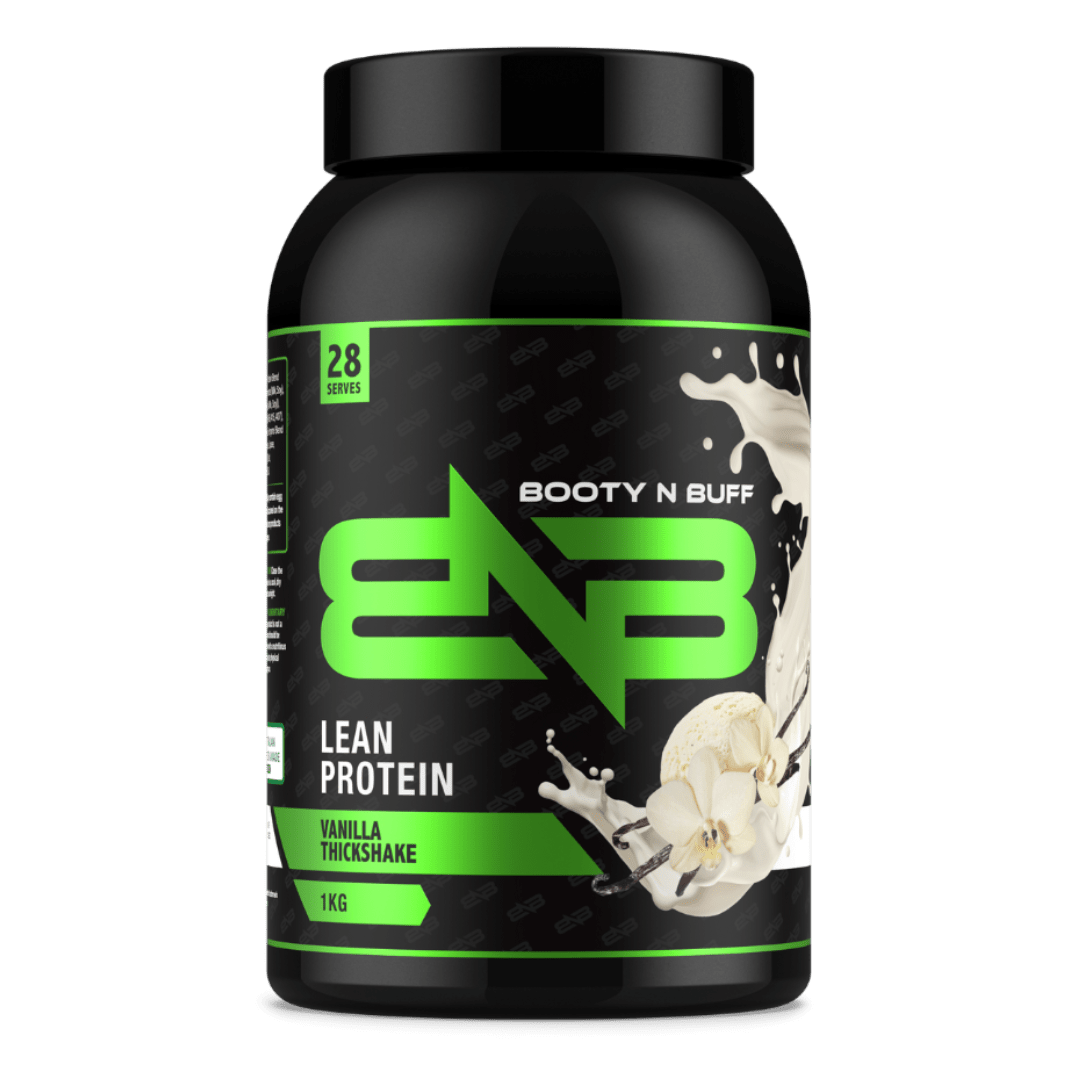
Our own Lean Protein is a blend of whey protein isolate and concentrate, with about 28g of protein in every 35g scoop, an ultra-low carb profile and no added sugar. If you want the leanest option, go for a whey protein isolate (WPI). And if taste is what keeps you consistent, start with our top 5 tastiest proteins. Not sure which type suits you? Here's how to choose your perfect protein powder.
Protein over 50
As we get older, our muscles respond less strongly to the protein we eat. It's called anabolic resistance. Because of this, experts often recommend that adults over 50 aim for 30 to 35g of protein per meal, and around 1.2 to 1.6g per kilogram a day. It's never too late to make protein a priority and hang on to your strength and mobility.
Does timing matter?
Less than the old gym myths suggest. You don't need to chug a shake the second you finish your last set.
That said, having protein within a couple of hours of a weights session is useful, especially as you get older. If you can get 15 to 20g in within an hour of training, it helps kickstart recovery.
A more common mistake is cramming all your protein into one massive dinner. Your body will still use it, but spreading it across three or four meals is generally better for your muscles and for keeping hunger in check. Think of it like watering a plant. You wouldn't give it ten litres on Monday and nothing for the rest of the week.
Can you have too much protein?
More isn't always better. For a healthy adult, going well past 2g per kilogram probably won't give you extra benefits, and it can crowd out the carbs and fats that fuel your training. It's all about balance.
If you have health concerns, especially around your kidneys, talk to a dietitian or your GP about the right range for you.
The bottom line
Once I stopped stressing about every single gram and focused on that 50g-per-meal benchmark, my results really took off. I felt stronger in the gym, I recovered faster, and the mid-afternoon energy crash disappeared.
Your needs will change depending on whether you're training for a marathon, chasing a squat PB or just staying healthy and active. Start with the numbers above and adjust from there. And if you're adding cardio to your week, here's how to run without losing your gains.
Keep reading: protein water, what is it? and the ultimate guide to creatine, the other supplement worth taking every day.
Shop this article
Three easy ways to hit your protein numbers: our own Lean Protein, a pure whey isolate from Black Wolf, and a high-protein bar for the gym bag. Or browse every protein powder we stock.
 Booty N Buff
Lean Protein
From $119.95
Shop now
Booty N Buff
Lean Protein
From $119.95
Shop now
 Black Wolf
 Hydro Whey Isolate
$109.95
Shop now
Black Wolf
Black Wolf Hydro Whey Isolate
$109.95
Shop now
 Body Science BSc
High Protein Low Carb Bar
From $4.95
Shop now
Body Science BSc
High Protein Low Carb Bar
From $4.95
Shop now
How do you find hitting your protein? Got a go-to meal that makes it easy? Drop a comment below and share your best tips with the BnB Fam.
Stay strong and keep pushing.
Jonathon Dixon
Founder, BootyNBuff


