


BNB Talk
Collagen Benefits for Skin, Joints, Bones and Muscle
What collagen is, what the research says about skin, joints, bones and muscle, collagen vs whey, the types, and how much to take.

Today I want to dive into a topic that's been flooding my inbox and my social feeds: collagen. If you've spent any time in the fitness world, or even walked down the supplement aisle at your local chemist, you've seen it everywhere, in powders, capsules, protein waters and even protein bars.
When I started my own fitness journey, the focus was almost entirely on whey protein and creatine. Collagen was something people mentioned for skin or hair, but rarely for building a strong, functional body. As I've got older, and as we've built the BnB Fam, my view has shifted. Looking after your foundations, your joints, skin and connective tissue, is just as important as hitting a new PB on the squat rack.
I don't want you spending your hard-earned money on something just because it's trendy. So let's break down what collagen is, what the research says about its benefits, and how to take it.
Collagen in 30 seconds
- What it is: the most abundant protein in your body, the "glue" in your skin, tendons, ligaments, cartilage and bones.
- Where research looks most promising: skin elasticity and hydration, joint comfort for active people, and bone and muscle support when paired with training.
- How much: most studies use 2.5 to 15g a day, taken consistently for 8 to 12 weeks.
- Buy: hydrolysed collagen peptides. They dissolve easily and are well absorbed.
What is collagen?
I like to think of collagen as the glue that holds us together. It's the most abundant protein in the human body and gives structure to your skin, bones, muscles, tendons and cartilage. Your body makes its own, but production drops as you age, which is one reason people start to notice stiffer joints or changes in their skin.
Collagen supplements are usually made from cow (bovine) or fish (marine) collagen that's been broken down into small pieces called peptides, so it mixes easily into water, coffee or a shake.
Collagen benefits: what the research says
Skin
This is the number one reason people in the BnB Fam ask me about collagen, and the research is promising. Reviews of the studies suggest that taking collagen daily for 8 to 12 weeks can help skin elasticity and hydration, and reduce dryness and roughness. True confidence comes from strength and health, but glowing skin doesn't hurt.
Joints
As someone who trains hard, joint health is a big priority for me. There's nothing more frustrating than progress stalled by a niggling knee or shoulder. Collagen is found in your cartilage, and studies in active people suggest collagen may help with joint comfort and stiffness, especially during hard training. It's one more tool, alongside smart programming, good warm-ups and proper technique.
Bones
We talk about muscles a lot, but we can't forget the frame they sit on. Collagen makes up a large part of your bones. In one 12-month study of women after menopause, 5g of collagen a day alongside calcium and vitamin D lowered markers of bone loss more than calcium and vitamin D alone.
Muscle and recovery
Now for the Buff part of Booty N Buff. Whey is still the king of muscle building, but collagen has a role too. In a 12-week study of older men doing resistance training, those who took 15g of collagen a day gained more muscle and strength than those who trained without it. Collagen is also rich in glycine and proline, the amino acids your tendons and ligaments are built from.
Collagen isn't a replacement for training or a good diet. It's a smart way to support your body from the inside out.
Collagen vs whey protein
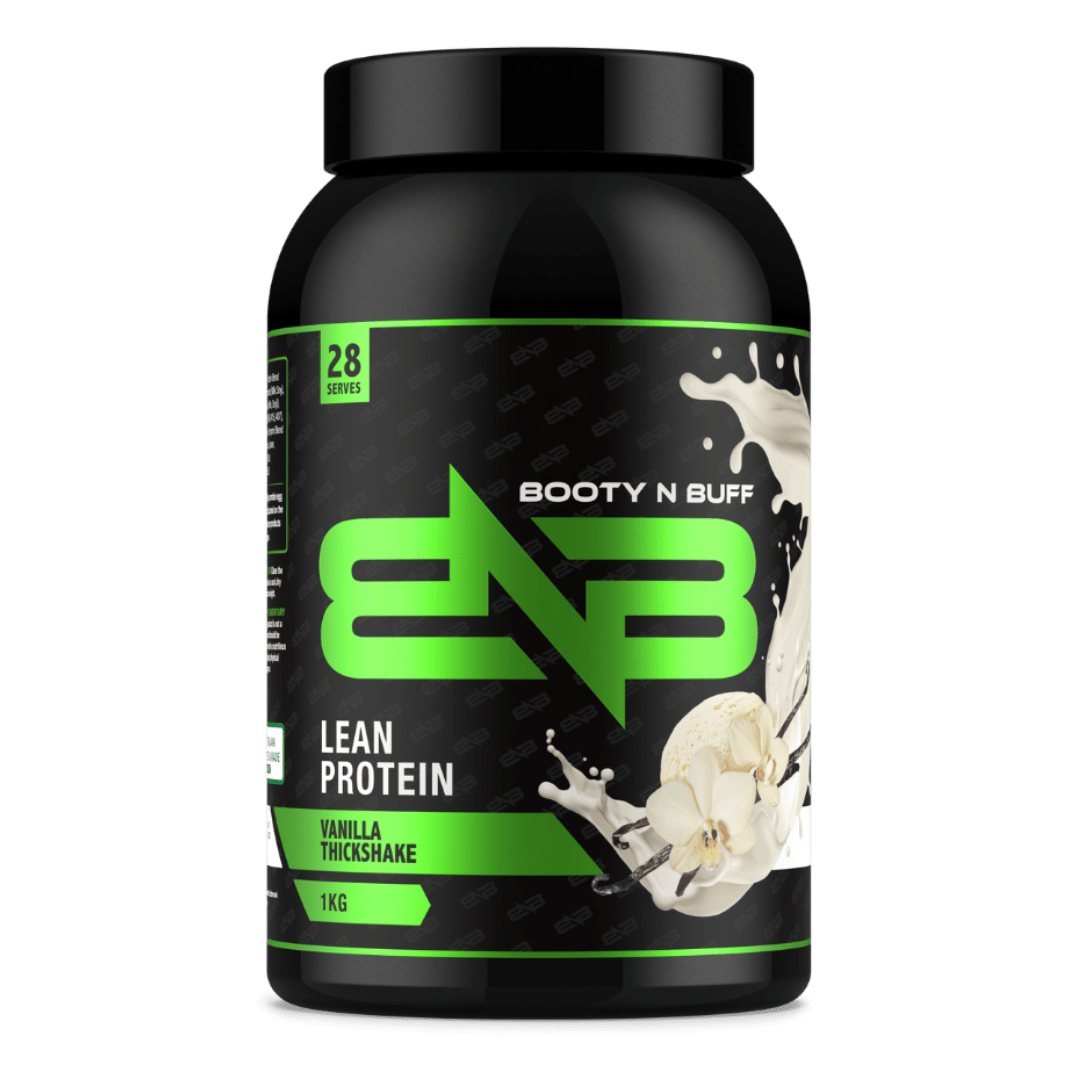
This is important. Collagen is not a complete protein. It's low in some essential amino acids, including leucine, the one that switches on muscle building. That's why I still recommend a quality whey, like our Lean Protein, as your main protein after training, and collagen as a top-up on top.
The upside of collagen is how easy it is to take. Collagen protein waters mix clear and light, like a juice, so they're a great way to add protein without another heavy shake. Read our protein water guide for more on collagen vs clear whey.
The types of collagen
Not all collagen is the same, and labels can get confusing. Here's what the main types mean:
- Type I: the most common type, found in your skin, bones and tendons.
- Type II: found mainly in cartilage, so it's the one linked to joints.
- Type III: found in your skin, muscles and blood vessels, often alongside Type I.
Bovine collagen is mostly Types I and III. Marine collagen is mostly Type I. Some products, like Faction Labs Protein Water, blend sources to cover Types I, II and III.
Why hydrolysed collagen peptides?
If you take one thing from this post, let it be the word "hydrolysed". You'll often see collagen sold as collagen peptides. That isn't just marketing: it means the collagen has been broken down into smaller pieces, so it dissolves easily and your body absorbs it well. Most of the research uses hydrolysed collagen, so that's the form to buy.
How much collagen should you take?
- Dose: most studies use 2.5 to 15g a day. Skin studies tend to use the lower end; joint, bone and muscle studies use 5 to 15g.
- Timing: any time of day. Consistency matters more than timing.
- How long: give it 8 to 12 weeks before you judge it.
- Food sources: bone broth and meat on the bone contain collagen, but supplements give you a consistent, measured dose.
Collagen is generally well tolerated. As with any new supplement, check with your doctor first if you have a medical condition, are pregnant or are breastfeeding.
Which collagen should you buy?
- Most protein a serve: Cyborg Sport Collagen Protein Water, 25g of protein from bovine collagen, in 11 flavours.
- A classic collagen powder: Reset Nutrition Collagen Protein Powder, about 25g of protein a scoop.
- Our favourite taste: Nexus Super Protein, a fruity collagen protein water.
- Collagen plus hydration: Primabolics Complete Collagen Protein Water + Hydration, with added electrolytes.
- Chocolate or vanilla: ATP Science NoWay Collagen Protein, for a creamier collagen shake.
Browse our full collagen range.
Collagen FAQ
Is it worth taking collagen?
If you want extra support for your skin, joints and connective tissue, or an easy way to add protein, it's worth a try for 8 to 12 weeks. Just don't use it instead of a complete protein like whey.
Can collagen help build muscle?
It can help a little when paired with training, but whey is better for building muscle because it's a complete protein.
When is the best time to take collagen?
Any time. Many people add it to their morning coffee or have a collagen protein water in the afternoon.
Is collagen vegan?
No. Collagen comes from animals, usually cows or fish.
Can I take collagen with creatine?
Yes. Unflavoured creatine mixes straight into your collagen drink. Read our creatine side effects guide to get started.
Shop this article
The collagen protein water with the most protein a serve, a classic collagen powder, and our taste-test favourite. Or browse our full collagen range.
 Cyborg Sport
 Collagen Pro Protein Water
$89.95
Shop now
 Reset Nutrition
 Collagen Protein Powder
$89.95
Shop now
 Nexus Sports Nutrition
Super Protein
From $44.95
Shop now
I'd love to hear from you, BnB Fam. Have you added collagen to your routine yet? Have you noticed a difference? Drop a comment below and let's chat.
Stay strong,
Jonathon Dixon
Founder, Booty N Buff

